

- Phone:0086-27-68780871
- Fax:0086-27-68780871
- Email:fachb@ihb.ac.cn
- Address
No. 7 Donghu South Road
Wuchang District
Wuhan
Hubei Province
China
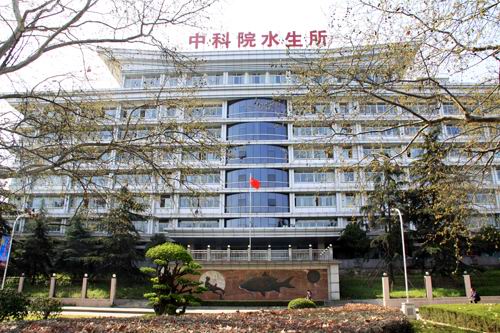
The Institute of Hydrobiology (hereinafter abbreviated as IHB), Chinese Academy of Sciences (hereinafter abbreviated as CAS), is a comprehensive academic research institution which devotes to the studies of life processes of inland aquatic organisms, ecological environment protection and utilization of biological resources. It was evolved from Natural History Museum of Academia Sinica founded in Nanjing, January 1930. It was then located in Shanghai, but moved to Wuhan in September 1954.
There are 357 regular employees, among whom 275 are research and technical personnel. At present, IHB has 6 research centers, which are: Center for Aquatic Biodiversity and Resource Conservation, Center for Freshwater Ecology, Center for Fish Biology and Fishery Biotechnology, Center for Water Environment Engineering, Center for Water Environment and Human Health and Center for Algal Biology and Applied Research. It also has 3 important laboratories, i.e. the State Key Laboratory of Freshwater Ecology and Biotechnology, CAS Key Laboratory of Aquatic Biodiversity and Conservation, and National Research Center for Freshwater Fisheries Engineering (Wuhan). Besides, it has 3 field observation and scientific research stations, i.e. East Lake Experimental Station of Lake Ecosystems (national station), Ecosystem Research Station of Xiangxi River in the Three Gorges Reservoir Region and the Dianchi Lake Field Station for Ecosystem Research and Rehabilitation. The Institute has also set up some research centers in East China, one in Huai’an City, Jiangsu Province, and the other is a sub-center of state key laboratory in Ningbo City, Zhejiang Province, i.e. Ningbo Sub-center of State Key Laboratory of Freshwater Ecology and Biotechnology. In Hubei Province, it is the possessor of Water Ecological Engineering Technology Research Center of Hubei Province and Water Environmental Engineering Technology Research Center of Wuhan City. The Sub-center for Aquatic Ecosystems of Chinese Ecosystem Research Network (CERN) is affiliated to the Institute, and it is also the leading organizer of Wuhan Equipment Center for Life Science of CAS. The Museum for Aquatic Organisms -- Asia’s largest freshwater fish museum, as well as Baiji Dolphinarium, which is equipped with modern rearing facilities for freshwater cetaceans, are located in the Institute. The Institute also possesses an R&D Division of Public Technology and Service which is made up of the Center for Public Technology and Service (Analysis and Testing Center), China Zebrafish Resource Center and Freshwater Algae Culture Collection.
 |